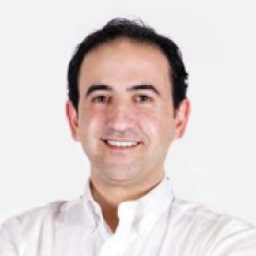
Background & experience:
- Mathematician by training with a Ph.D. in Mathematical Sciences and extensive cross-industry experience across retail, logistics, banking, healthcare, and bioinformatics.
- More than a decade of experience spanning computer vision engineering, mathematical modelling, data science, and consulting.
Before discussing the implications, what exactly was announced?
Taras: I would still be precise about what has been verified. Lean checks that formal proof establishes a formal theorem. In this case, the theorem was compared with Mathlib’s formal statement of the Riemann Hypothesis, and the proof was checked by Lean’s kernel and other checkers. That is exceptionally strong evidence for the correctness of the formal proof. It is different from having a short, readable mathematical account that researchers can use to understand the ideas and their significance. Alpöge says that account remains to be written and that the argument is long and complex.
So, is it fair to say that Claude proved the Riemann Hypothesis?
Taras: It is fair to say that a mathematician announced a proof developed with Claude, and that the formal proof has since passed extensive checks. “Claude proved it” is a convenient headline, but it hides the collaboration. Alpöge describes choosing a promising direction and guiding the work; he also says Claude made major contributions and outpaced him near the end. We should neither erase the human contribution nor minimise the model’s role.
There is another useful distinction: checking a proof and explaining a proof are different jobs. Lean can check that each formal step follows from the previous ones, provided the statement, definitions and trusted foundations are right. It does not, by itself, explain why the argument works, which parts are conceptually central, or whether the techniques will be useful elsewhere.
Does this mean AI invented a completely new mathematical theory?
Taras: We should not jump to that conclusion. Proof of a new theorem can be original and important even when it draws on established mathematics. The difficult part may be seeing how familiar ideas fit together, finding the right intermediate results, and making all the pieces work under the required conditions.
The public material does not yet give us a simple account of every important step or a full record of how Claude reached them. Alpöge’s announcement describes a complicated argument and says that a more understandable exposition is still needed. So, I would call this a major AI-assisted proof, while leaving the assessment of its new mathematical ideas to the detailed exposition and further study.
For me, a plausible AI advantage is the ability to search a broad space of approaches: generate candidate arguments, test consequences, look for counterexamples, follow references, and keep several lines of investigation moving. That can produce a new combination without requiring the invention of an entirely new mathematical language.
What does this suggest about AI’s role in scientific research?
Taras: It suggests that AI can increase the scale and speed of exploration. A researcher may be able to ask a system to pursue several approaches, work through intermediate calculations, test examples, search relevant literature and help formalise a proof. The value is not just “the model knows more mathematics.” It may be that the researcher can investigate more possibilities before time or attention runs out.
That does not mean every possibility deserves equal trust. Several agents can repeat the same mistaken assumption, and a polished argument can still target the wrong statement. A proof assistant is powerful because it checks a formal argument, but researchers still need to understand what the theorem says and which assumptions it uses.
The likely change is in the research workflow: AI takes on more of the search and construction, while humans spend more time choosing directions, connecting the result to the field, and deciding what would count as meaningful progress.
Some people say the limit of science is becoming the quality of the question. Do you agree?
Taras: Partly. Better problem framing matters more when AI can explore many candidate solutions. A precise question helps define the target, the constraints, and the checks. A vague question can produce a lot of work that is impressive but irrelevant.
But I would not say that question quality is now the limit of science. Research is a loop: ask a question, explore, find a surprising result, refine the question, and test the new result. Sometimes the most valuable outcome is an answer to a question the researcher did not know to ask at the start.
Is the human role shifting from “solver” to “validator and problem-framer”?
Taras: The human role is expanding, not disappearing. People will still solve problems, but more of the work may involve defining the problem well, designing the search, checking assumptions, interpreting results and deciding what to do with them.
“Validator” also needs a careful definition. In mathematics, a proof assistant can check formal logic very rigorously. In a business problem, there often isn’t an equivalent tool that can certify the answer. If an AI suggests a route plan or a maintenance policy, someone must decide whether the constraints reflect real operations, whether the data represents current conditions and whether the outcome is acceptable in practice.
What should our clients take from this?
Taras: They should expect AI to make it cheaper and faster to explore solutions but not to make every difficult problem automatically solvable. If a client has a complex scheduling, forecasting or optimisation problem, AI may help generate and compare more candidate approaches, test scenarios, inspect exceptions and explain trade-offs.
But the system still needs a well-defined objective, reliable data and meaningful acceptance criteria. If the client says “optimise the routes” but leaves out driver rules, delivery priorities or the reasons planners override the output, an AI system may optimise the wrong thing very efficiently.
The opportunity is to bring AI into the problem-solving loop earlier: use it to broaden the set of hypotheses, then use domain knowledge and evidence to narrow that set. The client’s expertise becomes more valuable in defining success and validating consequences.
How would you summarise the Riemann result?
Taras: As of November 23, the formal proof of the Riemann Hypothesis announced by Levent Alpöge with Claude has received strong independent machine checking and an explicit endorsement from the Lean and Mathlib communities. The next important task is to make the argument easier for mathematicians to understand and assess.
The broader lesson is that AI may be able to explore and assemble mathematical ideas at a scale that changes research practice. That does not mean every AI result is novel, or that humans can step away from the work. It means we need to pair faster exploration with stronger ways to check what was proved, what assumptions it depends on, and why the result matters.




Related insights







The breadth of knowledge and understanding that ELEKS has within its walls allows us to leverage that expertise to make superior deliverables for our customers. When you work with ELEKS, you are working with the top 1% of the aptitude and engineering excellence of the whole country.
Right from the start, we really liked ELEKS’ commitment and engagement. They came to us with their best people to try to understand our context, our business idea, and developed the first prototype with us. They were very professional and very customer oriented. I think, without ELEKS it probably would not have been possible to have such a successful product in such a short period of time.

ELEKS has been involved in the development of a number of our consumer-facing websites and mobile applications that allow our customers to easily track their shipments, get the information they need as well as stay in touch with us. We’ve appreciated the level of ELEKS’ expertise, responsiveness and attention to details.